On Head of School burnout
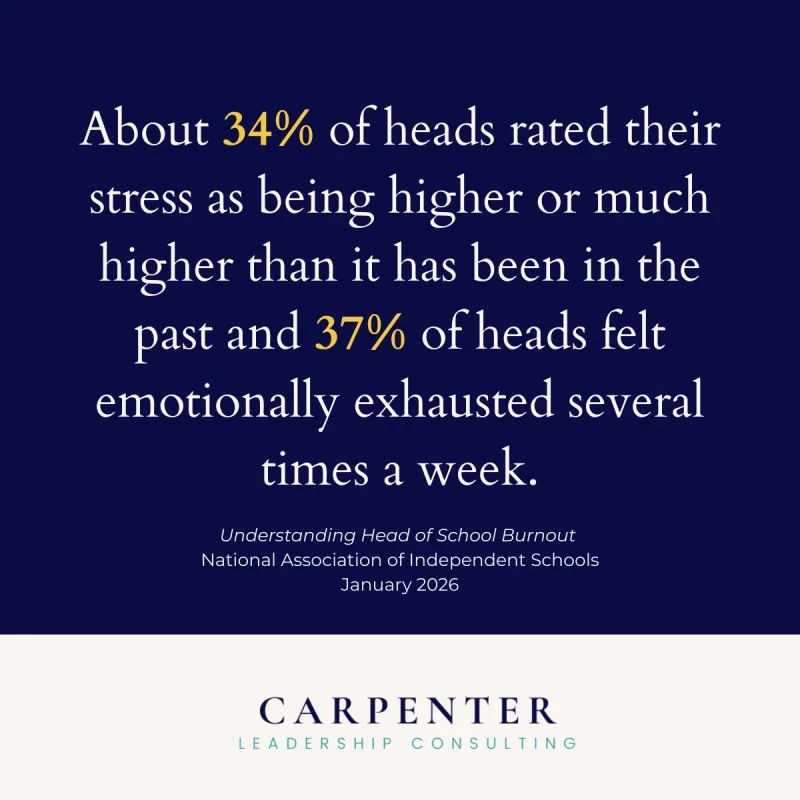
Last week, the National Association of Independent Schools reported its snapshot survey on Head of School burnout.
I've spent the last couple of days reading and reflecting on it.
While the findings aren't surprising, they are sobering.
One thing stood out to me.
Burnout at the head level is no longer episodic.
It’s systemic.
The data reflects what many leaders quietly carry every day.
Sustained pressure.
Emotional fatigue.
A constant expectation to be on.
And very few places to set the weight down.
Burnout is often framed as an individual resilience issue.
But the survey points to something else.
It’s a design problem.
When leadership roles are built without enough margin, when expectations expand faster than capacity, and when reflection and recovery are treated as optional, burnout becomes predictable.
Not because leaders aren’t capable.
But because the system is asking too much for too long.
In my work as a coach, I know that sustainable leadership is rarely about working harder or becoming more efficient.
It’s about:
• Clearer priorities
• Fewer competing demands
• Protected thinking time
• Real support, not just symbolic encouragement
• Permission to lead in a way that is human, not heroic
When heads are supported to lead sustainably, schools benefit.
Decision-making improves.
Culture stabilizes.
People feel the difference.
Burnout is not a personal failure.
It’s feedback.
And the question worth asking now isn’t, “How do leaders push through?”
It’s, “How do we redesign leadership so people can stay well and effective over time?”
If you want more leadership insights, practical strategies, and actionable tips, click here to sign up for my monthly newsletter.